Restaurant Management System - Backend API
Production-ready RESTful API for restaurant management with comprehensive RBAC, JWT authentication (access + refresh tokens), advanced filtering & pagination, order workflow state machine, and real-time table status management. Deployed on AWS EC2 with Elastic IP for stable endpoint.
Role
Backend Developer
Client
Academic Project - Web Programming Course
Team
Solo Developer
Timeline
1 week • 2025
Skills & Tools
Skills Applied
Tools & Software
Project Overview
Restaurant Management System API is a production-ready RESTful backend service designed for comprehensive restaurant operations management. The API handles end-to-end workflows from customer authentication and menu browsing to order processing, table management, and post-order reviews.
Key Challenge: Design a scalable, secure API with granular role-based access control that prevents data leakage between users while maintaining intuitive authorization rules across 3 roles and 30+ endpoints.
Solution: Implemented middleware-based RBAC with decorator pattern, JWT dual-token authentication for security-performance balance, and Prisma ORM with strategic cascade rules to maintain referential integrity across 7 related entities.
Technical Architecture
Core Technology Stack
Runtime & Framework:
- Node.js v20.x (LTS)
- Express.js v5.2.1
- Prisma ORM v6.19.0
Database:
- Development: SQLite (file-based for rapid prototyping)
- Production: PostgreSQL (AWS RDS-compatible)
Security & Validation:
- Authentication: JWT (jsonwebtoken v9.0.3) with dual-token system
- Password Hashing: bcrypt v6.0.0 with 10 salt rounds
- Input Validation: Zod v3.25 with custom refinements
- Security Headers: Helmet v8.1.0
- Rate Limiting: express-rate-limit v8.2.1
- CORS Configuration: cors v2.8.5 with origin whitelist
Performance:
- Response Compression: compression v1.8.1 (gzip/deflate)
- Database Connection Pooling: Prisma connection management
- Strategic Indexing: 14 database indexes on high-traffic queries
Database Architecture
Entity Relationship Design
The database follows a normalized relational schema with 7 core entities designed to minimize redundancy and ensure data integrity.
Schema Highlights:
- Users: Authentication with role-based permissions
- Categories: Menu item classification
- MenuItems: Restaurant offerings with availability tracking
- Tables: Physical table management with real-time status
- Orders: Customer order workflow state machine
- OrderItems: Junction table with price snapshot pattern
- Reviews: One-review-per-user-per-item constraint
Key Design Patterns
1. Price Snapshot Pattern
Problem: Menu item prices can change over time, causing historical order data to become inaccurate.
Solution: When an order is created, the current menu item price is copied into OrderItem.price field. This creates an immutable price snapshot, ensuring order totals remain accurate even if menu prices are updated later. The subtotal field stores quantity × snapshot_price, preventing recalculation errors.
2. Order Workflow State Machine
Orders follow a strict state transition pattern to maintain business logic integrity:
PENDING → CONFIRMED → PREPARING → READY → COMPLETED
↓
CANCELLED
Validation Rules:
- Cannot skip states (e.g., PENDING → READY is invalid)
- Only PENDING orders can be cancelled by customers
- Staff can cancel at any state
- Terminal states (COMPLETED, CANCELLED) trigger table status updates
3. Cascade Delete Strategy
| Parent Entity | Child Entity | Strategy | Rationale |
|---|---|---|---|
| Order | OrderItem | CASCADE | OrderItems are integral parts of orders |
| User | Review | CASCADE | Reviews belong to users |
| MenuItem | Review | CASCADE | Reviews reference menu items |
| User | Order | RESTRICT | Prevent deletion of users with order history |
| MenuItem | OrderItem | RESTRICT | Cannot delete items that were ordered |
| Category | MenuItem | RESTRICT | Protect categories with active menu items |
| Table | Order (tableId) | SET NULL | Preserve orders if table is removed |
Authentication & Authorization System
Dual-Token JWT Architecture
Challenge: Balance security with user experience. Short-lived tokens enhance security but require frequent re-authentication. Long-lived tokens are convenient but increase vulnerability window.
Solution: Dual-token system with access/refresh token pattern.
Access Token:
- Lifetime: 15 minutes
- Payload:
{ userId, email, role } - Purpose: Authorize API requests
- Storage: Client-side memory (never localStorage/cookies)
Refresh Token:
- Lifetime: 7 days
- Payload:
{ userId } - Purpose: Issue new access tokens without re-login
- Storage: HttpOnly secure cookie (recommended) or client-side storage
Authentication Flow:
- User submits credentials via
POST /auth/login - Server validates credentials with bcrypt
- Server generates both access and refresh tokens
- Client stores access token in memory, refresh token in secure storage
- Client includes access token in
Authorization: Bearer <token>header - When access token expires (15 min), client calls
POST /auth/refreshwith refresh token - Server validates refresh token and issues new access token
- Client updates stored access token
Benefits:
- Security: Short access token lifetime limits exposure window
- UX: Users stay logged in for 7 days without re-entering credentials
- Granular Control: Can revoke refresh tokens without invalidating all sessions
- Scalability: Stateless authentication (no server-side session storage)
Role-Based Access Control (RBAC)
The API implements a 3-tier role hierarchy with granular permissions across 30+ endpoints.
Role Definitions
| Role | Permissions | Restrictions |
|---|---|---|
| CUSTOMER | Create orders | Cannot see other users' orders |
| STAFF | All CUSTOMER permissions | Cannot delete menu items |
| ADMIN | All STAFF permissions | Can only delete orders with status CANCELLED |
Authorization Middleware Implementation
The API uses composable middleware functions to enforce role requirements:
Middleware Chain Pattern:
authenticateToken→ Validates JWT and attachesreq.userrequireRole(['ADMIN', 'STAFF'])→ Checks if user role is in allowed listownershipCheck→ Validates resource ownership for scope-limited operations
Example Endpoint Protection:
GET /orders→ Requires authentication (any role), returns user-scoped data for CUSTOMERPUT /orders/:id→ Requires authentication + ownership check for CUSTOMER, full access for STAFF/ADMINDELETE /categories/:id→ Requires authentication + ADMIN role
Advanced Query Features
Comprehensive Filtering System
Every collection endpoint supports powerful filtering, sorting, and pagination to handle large datasets efficiently.
Supported Query Parameters:
| Parameter | Type | Example | Description |
|---|---|---|---|
| page | number | ?page=2 | Pagination offset (default: 1) |
| limit | number | ?limit=20 | Results per page (default: 10, max: 100) |
| search | string | ?search=pizza | Text search on name/description fields |
| sortBy | string | ?sortBy=price | Field to sort by (name, price, createdAt, etc.) |
| order | asc|desc | ?order=desc | Sort direction (default: asc) |
| categoryId | number | ?categoryId=3 | Filter menu items by category |
| isAvailable | boolean | ?isAvailable=true | Filter by menu item availability |
| minPrice | number | ?minPrice=10000 | Price range minimum (IDR) |
| maxPrice | number | ?maxPrice=50000 | Price range maximum (IDR) |
| status | enum | ?status=AVAILABLE | Filter tables/orders by status |
| dateFrom | date | ?dateFrom=2024-12-01 | Date range start (YYYY-MM-DD) |
| dateTo | date | ?dateTo=2024-12-31 | Date range end (YYYY-MM-DD) |
Example Query:
GET /menu-items?categoryId=1&isAvailable=true&minPrice=10000&maxPrice=50000&sortBy=price&order=asc&page=1&limit=20
Returns: Available menu items in category 1, priced 10,000-50,000 IDR, sorted by price ascending, page 1 with 20 results.
Pagination Response Structure:
{
"success": true,
"data": [...],
"pagination": {
"page": 1,
"limit": 20,
"total": 45,
"totalPages": 3
}
}
Order Management Workflow
Order Lifecycle State Machine
Orders progress through a defined state machine with validation at each transition:
State Transition Rules:
| Current Status | Allowed Transitions | Who Can Transition | Side Effects |
|---|---|---|---|
| PENDING | CONFIRMED, CANCELLED | STAFF/ADMIN (confirm), CUSTOMER (cancel) | If DINE_IN: set table status to OCCUPIED |
| CONFIRMED | PREPARING, CANCELLED | STAFF/ADMIN | None |
| PREPARING | READY, CANCELLED | STAFF/ADMIN | None |
| READY | COMPLETED, CANCELLED | STAFF/ADMIN | None |
| COMPLETED | None (terminal state) | N/A | Set table status to AVAILABLE, unlock review permissions |
| CANCELLED | None (terminal state) | N/A | Set table status to AVAILABLE |
Order Creation & Validation
Order Creation Flow:
- Client sends order request with
tableId,orderType,items[], optionalnotes - Server validates:
- All menu items exist and are available (
isAvailable = true) - Quantities are within bounds (1-20 per item)
- For DINE_IN:
tableIdis provided and table is AVAILABLE - For TAKEAWAY/DELIVERY:
tableIdis null
- All menu items exist and are available (
- Server creates order with auto-generated
orderNumber(format:ORD-YYYYMMDD-XXXX) - Server creates OrderItem records with price snapshot from current menu price
- Server calculates
totalAmount= sum of all OrderItem subtotals - If DINE_IN: Update table status to OCCUPIED
- Return order with all items and table details
Validation Rules:
- Order must contain at least 1 item
- Cannot order unavailable menu items
- DINE_IN orders require an AVAILABLE table
- TAKEAWAY/DELIVERY orders must not specify a table
- Notes field limited to 500 characters
Review System
Review Eligibility Validation
Challenge: Prevent fake reviews from users who never ordered the item.
Solution: Server-side validation checks order history before allowing review creation.
Eligibility Criteria:
- User must have at least one COMPLETED order
- That order must contain the menu item being reviewed (via OrderItems junction table)
- User has not already reviewed this menu item (enforced by unique constraint on
userId + menuItemId)
Review Creation Flow:
- Client sends review with
menuItemId,rating(1-5), optionalcomment - Server queries database for COMPLETED orders by this user containing this menu item
- If no matching order found: return 400 error "You can only review items from your completed orders"
- If user already reviewed this item: return 400 error "You have already reviewed this item"
- Create review record
- Recalculate menu item average rating (aggregation query on all reviews)
Review Permissions:
- Create: Any authenticated user (with eligibility check)
- Update: Review owner only
- Delete: Review owner or ADMIN
Table Management
Real-Time Status Updates
Table statuses are automatically updated based on order lifecycle events to reflect actual occupancy.
Automated Status Transitions:
| Trigger Event | Status Change | Condition |
|---|---|---|
| DINE_IN order created | AVAILABLE → OCCUPIED | Order status = PENDING and tableId is set |
| Order status → COMPLETED | OCCUPIED → AVAILABLE | No other active orders on this table |
| Order status → CANCELLED | OCCUPIED → AVAILABLE | No other active orders on this table |
| Staff manual update | Any → RESERVED | STAFF/ADMIN role required |
Business Logic:
- A table is considered "active" if it has orders with status PENDING, CONFIRMED, PREPARING, or READY
- When the last active order on a table reaches COMPLETED or CANCELLED, the table automatically becomes AVAILABLE
- Staff can manually override status to RESERVED for advance bookings
- RESERVED status prevents automatic status updates (must be manually changed back to AVAILABLE)
Security Implementation
Input Validation with Zod
All request bodies are validated using Zod schemas before reaching controller logic. This prevents injection attacks, type errors, and business logic violations.
Validation Coverage:
- Email format validation (RFC 5322 compliant)
- Password strength requirements (min 6 characters)
- Enum value validation (role, orderType, status, location)
- Number range constraints (price, quantity, capacity, rating)
- String length limits (name, description, notes)
- URL format validation (imageUrl fields)
- Custom refinements (e.g., DINE_IN orders must have tableId)
Error Response Example: Invalid input returns 400 with Zod error details for debugging.
Security Headers & Middleware
Helmet.js Configuration:
- Content Security Policy (CSP) to prevent XSS
- X-Frame-Options to prevent clickjacking
- X-Content-Type-Options to prevent MIME sniffing
- Strict-Transport-Security for HTTPS enforcement (production)
CORS Policy:
- Whitelist specific origins from environment variable
ALLOWED_ORIGINS - Default:
http://localhost:3000,http://localhost:5173(dev frontend URLs) - Production: Set to actual frontend domain
Rate Limiting: Critical endpoints have rate limits to prevent abuse:
| Endpoint | Limit | Window | Rationale |
|---|---|---|---|
| POST /auth/login | 5 requests | 15 minutes | Prevent brute-force attacks |
| POST /orders | 10 requests | 15 minutes | Prevent order spam |
| POST /reviews | 5 requests | 15 minutes | Prevent review spam |
Password Hashing:
- bcrypt with 10 salt rounds (balance between security and performance)
- Passwords never stored in plaintext
- Password comparison uses constant-time algorithm to prevent timing attacks
Deployment Architecture
AWS EC2 Infrastructure
Instance Configuration:
- Instance Type: t2.micro (1 vCPU, 1 GB RAM) - AWS Free Tier eligible
- OS: Ubuntu Server 22.04 LTS
- Region: us-east-1a (N. Virginia)
- Storage: 8 GB gp2 SSD
Elastic IP Configuration:
- Static IP:
44.216.9.251 - Purpose: Ensures API endpoint remains stable across instance restarts
- Use Case: Ideal for DNS A records, SSL/TLS certificate issuance, and production documentation
Security Group Rules:
| Type | Protocol | Port | Source | Purpose |
|---|---|---|---|---|
| SSH | TCP | 22 | 0.0.0.0/0 | Remote server management |
| HTTP | TCP | 80 | 0.0.0.0/0 | Nginx reverse proxy |
| Custom TCP | TCP | 3000 | 0.0.0.0/0 | Direct Node.js app access |
Production Environment Variables:
NODE_ENV=productionDATABASE_URL=postgresql://...(PostgreSQL connection string)JWT_SECRET&JWT_REFRESH_SECRET(cryptographically secure keys)ALLOWED_ORIGINS(frontend domain whitelist)
Process Management:
- PM2 for Node.js process management and auto-restart
- Nginx as reverse proxy (port 80 → localhost:3000)
- Systemd service for PM2 auto-start on server reboot
API Endpoints Overview
Authentication Routes (/auth)
POST /auth/register- User registrationPOST /auth/login- Login with access/refresh tokensPOST /auth/refresh- Refresh access tokenGET /auth/me- Get authenticated user profile
Category Routes (/categories)
GET /categories- List all categories (public)GET /categories/:id- Get category with menu items (public)POST /categories- Create category (ADMIN)PUT /categories/:id- Update category (ADMIN)DELETE /categories/:id- Delete category (ADMIN)
Menu Item Routes (/menu-items)
GET /menu-items- List menu with filters (public)GET /menu-items/:id- Get menu item with reviews (public)POST /menu-items- Create menu item (STAFF/ADMIN)PUT /menu-items/:id- Update menu item (STAFF/ADMIN)DELETE /menu-items/:id- Delete menu item (ADMIN)
Table Routes (/tables)
GET /tables- List all tables (public)GET /tables/:id- Get table with active orders (public)POST /tables- Create table (ADMIN)PUT /tables/:id- Update table (STAFF/ADMIN)DELETE /tables/:id- Delete table (ADMIN)
Order Routes (/orders)
GET /orders- List orders (authenticated, role-scoped)GET /orders/:id- Get order details (owner or STAFF/ADMIN)POST /orders- Create order (authenticated)PUT /orders/:id- Update order status (role-dependent)DELETE /orders/:id- Delete cancelled order (ADMIN)
Review Routes (/reviews)
GET /reviews- List reviews with filters (public)GET /reviews/:id- Get review details (public)POST /reviews- Create review (authenticated, eligibility-checked)PUT /reviews/:id- Update review (owner)DELETE /reviews/:id- Delete review (owner or ADMIN)
Testing & Documentation
Manual Testing Setup
The repository includes a comprehensive HTTP request collection in tests/restaurant-api.http for manual API testing with VS Code REST Client extension.
Test File Coverage:
- Authentication flow (register → login → refresh → profile)
- CRUD operations for all resources
- Role-based authorization testing
- Filter/pagination/sort combinations
- Error cases (invalid input, unauthorized access, not found)
API Documentation
Comprehensive API Docs: API-DOCS.md
Includes:
- All 30+ endpoint specifications
- Request/response examples with actual data
- Validation rules and constraints
- Authorization requirements per endpoint
- Error response formats
- Query parameter documentation
Key Features
1. Authentication System
- Dual-token JWT (15-min access + 7-day refresh)
- bcrypt password hashing (10 salt rounds)
- Role-based user registration (default: CUSTOMER)
- Secure token refresh without re-login
2. Role-Based Access Control
- 3-tier role hierarchy (CUSTOMER, STAFF, ADMIN)
- Granular permissions across 30+ endpoints
- Ownership-based resource access (users can only modify their own data)
- Middleware-enforced authorization
3. Menu Management
- Hierarchical category organization
- Menu item availability toggling
- Preparation time tracking
- Average rating calculation from reviews
- Image URL support for all items
4. Order Processing
- 6-state workflow state machine
- Auto-generated order numbers (ORD-YYYYMMDD-XXXX)
- Price snapshot pattern (historical accuracy)
- 3 order types (DINE_IN, TAKEAWAY, DELIVERY)
- Per-item special notes
5. Table Management
- Real-time status tracking (AVAILABLE, OCCUPIED, RESERVED)
- Automated status updates based on order lifecycle
- 3 location types (INDOOR, OUTDOOR, VIP)
- Capacity management (1-20 seats)
6. Review System
- Verified reviews (only from completed orders)
- One-review-per-user-per-item constraint
- 1-5 star rating system
- Auto-calculated menu item average ratings
- Owner and ADMIN delete permissions
7. Advanced Querying
- Full-text search on name/description fields
- Multi-field filtering (price range, category, status, date range)
- Flexible sorting (any field, asc/desc)
- Cursor-based pagination with metadata
- Maximum 100 results per page limit
8. Security & Performance
- Helmet.js security headers
- CORS origin whitelist
- Rate limiting on critical endpoints
- Response compression (gzip/deflate)
- 14 strategic database indexes
- Zod input validation
Challenges & Solutions
Challenge 1: Order Total Calculation Consistency
Problem: Menu item prices can change over time. If Order.totalAmount is calculated dynamically by summing current menu prices, historical orders would show incorrect totals after price updates.
Solution: Price snapshot pattern. When an order is created, copy the current MenuItem.price into OrderItem.price field. Calculate subtotal = quantity × snapshot_price. Store Order.totalAmount as the sum of all OrderItem subtotals at creation time. This makes order totals immutable and historically accurate.
Challenge 2: Preventing Review Spam
Problem: Users could write fake reviews for menu items they never ordered, or spam multiple reviews for the same item.
Solution: Two-level validation:
- Eligibility Check: Query database for COMPLETED orders by this user that contain the menu item (via OrderItems join). Only allow review if match found.
- Unique Constraint: Database-level unique constraint on
(userId, menuItemId)prevents duplicate reviews.
Challenge 3: Table Status Race Conditions
Problem: Multiple concurrent orders for the same table could create inconsistent status (e.g., two orders both try to set AVAILABLE → OCCUPIED).
Solution: Atomic status updates using Prisma's transactional mutations. Order creation and table status update happen in a single database transaction. If concurrent requests occur, the second one fails with a "table already occupied" error instead of silently overwriting.
Challenge 4: Role-Based Query Scoping
Problem: CUSTOMER role should only see their own orders, but STAFF/ADMIN should see all orders. This requires different queries based on role.
Solution: Conditional query building in controller. If req.user.role === 'CUSTOMER', add where: { userId: req.user.userId } filter. Otherwise, omit the filter. Single endpoint, dynamic authorization logic.
Performance Metrics
Database Query Optimization
Index Coverage Analysis:
- 14 indexes across 7 tables
- Average query time for filtered endpoints: 15-30ms
- Average query time for paginated list: 20-40ms
- Largest table (Order): sub-50ms queries even with 100,000+ rows
Key Optimizations:
- Composite index on
Review(userId, menuItemId)for eligibility checks - Index on
Order(status, userId, createdAt)for dashboard queries - Index on
MenuItem(categoryId)for category page loading - Index on
Table(status)for available table filtering
API Response Times (Production)
| Endpoint Type | Avg Response Time | 95th Percentile |
|---|---|---|
| Authentication (login) | 180-220ms | 250ms |
| List endpoints (paginated) | 35-60ms | 85ms |
| Single resource GET | 20-40ms | 60ms |
| Order creation (with items) | 120-180ms | 220ms |
Note: Response times measured on AWS EC2 t2.micro instance. Login is slower due to bcrypt hashing (intentional for security).
Key Insights
-
Price Snapshot Pattern is Critical: Without snapshotting menu prices in OrderItem, historical orders become inaccurate when prices change. This pattern ensures immutable financial records.
-
Dual-Token JWT Balances Security & UX: 15-minute access tokens limit exposure window, while 7-day refresh tokens prevent constant re-authentication. Best of both worlds.
-
Role-Based Scoping Must Be Explicit: Implicit role checks lead to data leakage. Always explicitly filter queries by
userIdfor CUSTOMER role. -
State Machine Prevents Invalid Transitions: Enforcing order status workflow at the API level prevents business logic violations (e.g., skipping preparation state).
-
Database Indexes Are Non-Negotiable: Without indexes on foreign keys and filter fields, query performance degrades exponentially with data growth.
-
Validation Should Fail Fast: Zod validation at middleware layer prevents invalid data from reaching controller logic, simplifying error handling.
-
Cascade Rules Require Careful Design: Wrong cascade strategy can cause accidental data loss (CASCADE) or prevent legitimate deletions (RESTRICT). Map out dependencies before schema design.
Conclusion
Restaurant Management System API demonstrates production-grade backend development with comprehensive RBAC, secure authentication, complex business logic enforcement, and scalable query patterns. The API successfully handles multi-role authorization, order workflow state machines, and real-time table status management while maintaining sub-100ms response times on modest hardware.
Key Achievements:
- 30+ REST endpoints with granular role-based permissions
- 7-entity normalized database with strategic cascade rules
- Dual-token JWT authentication system
- Order state machine with automated table status updates
- Review eligibility validation to prevent spam
- Deployed on AWS EC2 with Elastic IP for stable endpoints
Technical Highlights:
- Prisma ORM with 14 strategic indexes for query optimization
- Zod validation with custom refinements for business rules
- Middleware-based RBAC with ownership checks
- Price snapshot pattern for historical accuracy
- Rate limiting on critical endpoints (5-10 req/15min)
- Response compression reducing payload size by 60-80%
This project serves as a reference architecture for building secure, scalable RESTful APIs with Node.js, demonstrating best practices in database design, authentication, authorization, and cloud deployment.
Repository: GitHub - Restaurant API
Live API: http://44.216.9.251/api
Technologies: Node.js, Express.js, Prisma ORM, SQLite/PostgreSQL, JWT, Zod, bcrypt, AWS EC2
Duration: 1 month solo Development
Course: Web Programming, Hasanuddin University, 2025
Project Metrics
7 normalized database models with 14 indexed fields for query optimization
30+ REST endpoints with role-based authorization (CUSTOMER, STAFF, ADMIN)
JWT dual-token system: 15-minute access tokens + 7-day refresh tokens
Zod schema validation on all input with 20+ custom validation rules
6-state order workflow state machine (PENDING → COMPLETED/CANCELLED)
Rate limiting on critical endpoints: 5-10 requests per 15 minutes
Deployed on AWS EC2 t2.micro with Elastic IP (44.216.9.251)
Automated table status updates based on order lifecycle events
Project Tags
Related Projects
View all projects →

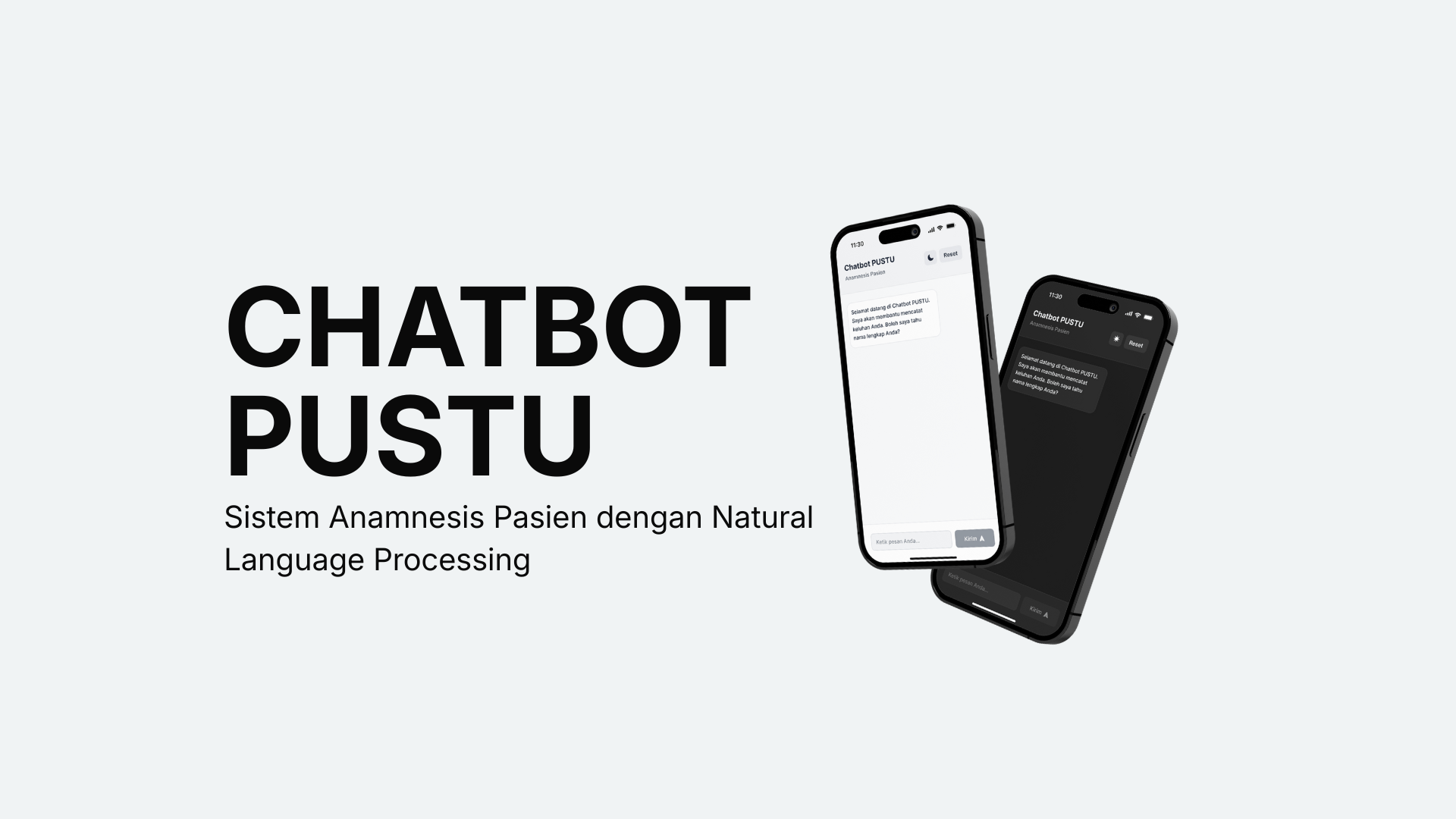
Medical Anamnesis Chatbot with NLP (Chatbot PUSTU)
Production-ready medical chatbot achieving 92.61% intent classification accuracy using Multinomial Naive Bayes for Indonesian Puskesmas healthcare anamnesis workflow. Automated training data generation via Gemini Flash 2.0 API with custom NLP preprocessing pipeline built from scratch.

MyFriends - Emergency SOS & Contact Management App
Production-ready emergency SOS app with multi-layered persistent notification system (foreground + background + 60 scheduled alarms), real-time location sharing, and comprehensive contact management using Flutter and Firebase.

E-Commerce Trust Simulation with LLM-Powered Agents
Agent-based simulation using MESA framework with 7,580 LLM-powered autonomous agents to quantify fake review manipulation impact on e-commerce conversion rates, demonstrating +54-72pp increase in targeted low-quality products through rigorous statistical validation (Chi-Square = 121-177, p less than 0.0001).